Showing posts with label History. Show all posts

Wednesday, October 5, 2011

Walking Through Adelaide - Photo Fun Pt 1

Well today I'm stuck at home getting over a cold, and feeling like taking it easy in front of the computer for a little while. I've just realised how little I've been posting of late - mostly due to some pretty insatiable work demands that have been consuming most of my time. And what time I've had left has been pretty well devoted to family time. As it should be.

Still, I'd like to push out a few more of my photos from the other month... a trip into the heart of Adelaide... where I just had one thing on my mind. Experiment taking photos. Well - these photos aren't exactly experimental, but they were fun for me to do. And the one thing I've been experimenting more with is B&W photography (care of some simple filtering in Picasa).


One of the more interesting sights in the city centre - and quite at the other end of the historical spectrum - is the Rundle Lantern. This was a light-sculptural feature that was built to hide one of the ugly car parks in the city and has now become a very the canvas for a quite interesting light show that plays every night (one evening I'll have to come down and take some video of it... but in the meantime have a look at this video by Martin Whipp).

Statue to Sir Ross Smith, who along with his brother Keith and Jim Bennett and Wally Shiers, were the first people to fly from England to Australia in 1919 (took 28 days and 135 flying hours!). He actually was one of the original Anzac's that landed in Galipoli back in 1915, and was also a WWI fighter ace... and was even the pilot for Lawrence of Arabia (of all people). These days we often forget the people that have forged such remarkable places in our history. Now you can find his statue, almost secluded alongside the Adelaide Oval.

Adelaide has some great architecture that dates from the late 19th century and early 20th century. And some of the best examples can be found along North Terrace with the Museum, Art Gallery, and Adelaide University in particular. Today I was more interested in the details rather than the buildings - plus I already had my 50-250mm lens on... The somewhat unusual tone work was just achieved using a very simple colour B&W filter which can really add some nice subtle textures especially against the sky blue tones.


I'm a sucker for some good old neo-gothic architecture, and Adelaide's architects were apparently too... And Adelaide University's Mitchell Building (built around 1880) is a classic Gothic Revival style that you can see spotted throughout the city.


With just a little tweaking of the filter, you can add some very nice tones to the B&W images... or at least they please my eye.


An almost B&W photo... I'm sorry I couldn't resist my tribute to Shindler's List symbolism... ok.... it wasn't that good a tribute. Unfortunately I didn't have much time to frame the shot, or wait for the cars to take off from the traffic lights... and it was hard to get the focus right to get the reflection in the water feature. Did it work... not quite, but it was worth a try.


And a couple of near-monochromatic photos for good measure. North Terrace has a number of Plane Trees  along it's wide boulevard, which make for a beautifully green walk in summer. Coming out of winter however, they also have these amazing seeds that look almost like dried Christmas decorations. Adelaide has a strange relationship with it's native and introduced flora. These Oriental Plane Trees were originally planted in Adelaide in 1910.... that's over a century of historical significance.

A little bit of a boost from the saturation on this photo brings a very different look and feel to the masonry on this tower detail from the Mitchell Building (see above).

Anyway - that's one more off my list of posts in a steadily growing backlog.

Friday, August 12, 2011

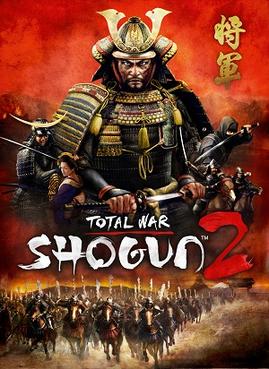
Game Review - Total War : Shogun 2

This is quite a change of pace now... and was inspired in part by a similar review by Jamaipanese's blog. A quick and dirty game review of Total War: Shogun 2 by Creative Assembly / Sega. Now I used to be a bit of a gamer (back when I was younger, and a bit more care-free - and stoopid). But I have to admit that I was always more in to the First Person Shooter (FPS) style games... like Modern Warfare 2 etc. To be honest however, I rarely get a chance to try out any new games. I couldn't however go past this game that was released earlier this year. (By the way - the top image comes from GameZone - as the TWS2 website didn't have a good cover shot that I could see)

The game is set in the 16th century AD, in what was known as the Sengoku Jidai, or the Waring States Period in Japanese history. It follows the daimyo or domain lords battles for ultimate supremacy over Japan. Part turn-based strategy or campaign game, part in-your-face 3D warfare simulation  the game would seem to have a large areas of the market covered. Especially if you have an interest in Japanese warfare or history. In the campaign game you have to build up your empire by careful diplomacy, cunning and civil engineering, as well as knowing the right time to make your move. The battle mode takes you down to ground-zero, as the tactical general, where you command all of your units against a strong AI opponent.
(Source: Official Cinematic Trailer)

The graphics are quite detailed, and add to the feel of the era. It's great to go down to ground-level and what the action (but it's not always that clever at choosing the viewing angles). There's a lot of detail here - though I understand that they've reduced the unit set considerably from previous versions. The one thing that I found a bit annoying is that the game doesn't really allow you to play at the operational level... once you jump into a battle, you're having to micro-manage all units all the same time. In my view, it would be better to be able to set up better "intents" that the units are able to follow (rather than just "move from A to B, doing C"). Instead you find yourself having to flit around the map giving minor unit directions (such as telling units to turn to face a new threat). I also get a little worried when you have to refer to an encyclopaedia to play... it's good to have the info, but less enjoyable for casual play if you need to be constantly checking things up. There's both ground-based and sea-based battles. The sea-based battles are to my mind the weak-point in the game, being too sensitive to individual commanding of each ship. The other main type of battle is based around seige warfare... and this can be quite fun.

Now I haven't been able to play this game anywhere near as much as I would like... and the FPS-gamer in me gets frustrated often (just shoot them....shoot them!), but with a little patience you can have a really challenging experience out of it.

I've included an IGN video review that does a much better job at describing the glorious detail and excitement of Shogun 2 - and to be honest, I don't have the experience to capture the game or put together anywhere near as good a presentation as they can do. It's also good to see how the gameplay looks and feels...though I have to say, it looks easier than it is....

(Source: IGN)

I have to say that I'm not convinced that the game is completely realistic in the construction or behaviour of units, however, in the quasi-mythical world which they create, it's both a plausible and fulfilling environment. You need a pretty good system to get the most out of it (thankfully my box still has a enough juice after 18 months) - although for me the load times were painfully slow. Also - I'm not a fan of the Steam system... there's nothing more annoying than wanting to pick up a game and then having to wait for 300 MB of new downloaded content before you can play. Be warned. On the flipside, you can update and expand your gaming experience very easily.

If you've got an interest in historical Japanese warfare, or just want to immerse yourself in a game with plenty of detail (did I mention that it comes with an inbuilt encyclopaedia) then this is definitely a good game to check out. Let me know your experience if you've played it - especially on the historical aspects of the game. I'd give it a 7/10 as a game - just coz I'm a total FPS-head and don't have the patience to really spend the time required... but it's worth buying just for the experience.

Sunday, March 20, 2011

Adelaide's Rundle Street Architecture - A Change of Pace

For all the going's on in the world, there's often no place like home. And home for me is Adelaide. Good ol' Adelaide. Now, Adelaide is a relatively young city, having been founded in 1836, and as a "free colony". That gave us a few things - most notably the distinctively "proper spoken english" with it's fuller, more rounded vowel sounds, as well as a much larger proportion of German Lutheran settlers around the outskirts of the city. The nature of the colony was also such that we never really out-grew our colony status... and to this day, Adelaide has a "big country town" feel that is often noted by inter-state visitors.

It also has Rundle Mall... the central shopping district of the CDB. A throw-back to the 70's when Malls were a novel invention to post-war Australia. A street for pedestrians. Add to that the 70's architectural modernism as encapsulated by the Mall's Balls (the two silver spheres shown above).

The architecture of Adelaide owes a lot to the period of it's founding, and indeed there remains a few relics of that time - including a fountain cast in the late 1800's. This is always a mecca for kids in summer... though it used to be filled with a white foaming substance (I don't even want to imagine what sort of chemical they used to put in there). Thankfully, it's now a more "normal" if coppery colour.


So Rundle Mall (which extends on to Rundle Street to the east) is the heart of the city. Looking at it, you might not be that impressed. And for good reason. It's meant to be a casual place for spring and autumn with plenty of outdoors walking. In winter and summer, pedestrians are always clambering to find shelter or shade respectively. Indeed, around late February you can see that in the later part of the afternoon, the Mall gets quite shaded anyhow.

Now I am no architect - amongst a great many things that I can safely say I'm not. But I do like looking at buildings as a way of reading the history of a city. And Adelaide has a fairly traditional, though slightly off-centre architectural heritage. I was hoping to take you on a quick walk down the Mall to see some of the more notable, though often unnoticed buildings. Actually, after I went looking... even I was quite surprised at the heritage that I had been walking around in - and the very unusual styles that pervaded the early buildings of Adelaide.

The Regent Arcade (below), like the Adelaide Arcade (next below) have a lot of style... ok they're not quite on the same scale as the QVB in Sydney, but they're grand old buildings that have been given a nice facelift of  late.
Regent Arcade
Adelaide Arcade in particular has a very nice style - which I will have to photograph next time I'm in Adelaide with my camera (not that often).
Adelaide Arcade
Yet beyond these obvious buildings, the real interesting story for me begins not at street level, but rather higher up - where the original buildings stand above the newer facia with a some kind of greek-like tragic pose. The styles are varied - but elaborate is an underlying theme. There is no real order to these photos - and no real story to the architecture... as I said, I'm no architecture expert.


And as you move into Rundle Street proper, it is actually a bit like walking on to a stage from an old historical movie (admittedly I'm showing a biased sample here). Still, you get the feeling of what sort of architectural skeletons can be found without too much effort in Adelaide's central business district.


One of the nice buildings is the old Adelaide Fruit and Produce Exchange building, or market. Though it's days of being a market have recently been replaced by trendy apartment living (not shown here) - there remains some of the old character. The east-end of the city really had a beautiful (and sometimes bohemian) feel to it. That's now replaced by the cafe set... still pleasant, but lacking much of the real honest personality.

The one building that I missed to photograph is the Adeliade Beehive building at the other (western) end of Rundle Mall - this building was owned by John Rundle (ah - now it's starting to make sense). I'll add that to my list of photo projects to do.