Showing posts with label Japan. Show all posts

Thursday, January 10, 2013

A New Story Is About To Begin


Well - it's been a bit quiet of late... and that's partly due to the joy of having a new baby (who recently turned a huge 10 months old) - and partly because life's priorities have changed. More recently it's been because I have been away. Yes - returning for our 9th trip to Japan in 10 years. And this was one to remember - though I will post about the trip in my companion blog (www.JapaneseTies.blogspot.com) eventually....

The big news I guess is that whilst away I found myself in the rather unusual situation of getting a job on my holiday. To be fair, it was a job I had applied for prior to my holiday - but was actually interviewed on my travels, and found out the result whilst in Japan. And, as it turned out, I was successful. And where, pray tell, is my new job? Why of course - in Japan. And not just anywhere - but in Tokyo - one of the world's busiest and most amazing of cities in the world. So in about 3 - 4 months, a very different chapter in our family story will begin, and we will find ourselves living in Japan. I'm not sure how much time I will have to blog - but I hope to share at least some of the journey.

In the mean time, I hope you all had a great Christmas and a very Happy New Year... and that 2013 will bring many happy surprises to you all!

Tuesday, May 8, 2012

Kodomo no Hi... Children's Day on 5th of May

The 5th of May is known in Japan as Kodomo no Hi, or simply put, Children's Day. It's actually one of the set of public holidays that makes up the Golden Week. Actually, you would think a day called Children's Day would be a pretty simple affair. Nothing is simple in Japan. The holiday is associated with a festival tango no sekku, which is a seasonal festival that celebrates the changing of seasons (from Spring to Summer)... it is also associated with the Boy's Festival (now that makes at least some sense).

One of the characteristics of the Boy's Festival is the flying of koinobori, or carp (koi) streamers (bori). Actually... you could also call them, wind-socks, but that doesn't quite have the same ring to it. These used to be arranged by the number of boys in the family. Instead, in Japan you will often see these hung out on long poles or wires from the house (especially from balconies)... The carp are meant to represent the vitality of young boys, swimming up stream, ever threatening to turn in to a dragon....


The top "streamer" is the dragon, which signifies the ideal of the man the boy would turn into. It's then followed by a black, red, then blue carp streamer, which are meant to represent the father, the mother and the son respectively. More children = more colours of carp.


Atop the pole is typically found a very odd contraption, yaguruma, which consists of a number of spinning wheels made of arrows, and a strange "propellor" which both spin wildly around in the wind. I have no idea what symbolic meaning this has, other than to be quite flashy.

Now, I thought I'd just put together a few of the photos I've taken today... a bit of self-indulgence.


And this is quite a cheeky shot... from inside the koi! Now that's just not right!....


Another tradition is that of the kabuto... which is a particular type of samurai helmet that is in an ornamental form. This is normally part of a set that is set up each year for Children's (aka Boy's) Day.


The helmet design actually pre-dates the samurai, but is now very much a part of the samurai image. Boys were an important part of samurai households, continuing on the family name and customs. It was for this reason that the tradition evolved of displaying these martial images as a way of warding of bad luck.

The kabuto helmet consisted of the main "bowl" or hachi (in this case emblazoned with a rather vicious looking dragon and horns)...


And an intricately woven neck guard, or shikoro.


To the right stands the sword, or katana, a samurai's symbol of power.

To the left, the bow and arrows, or yumiya.


The dragon is a sign of strength in Japan... and when you're main aim is to intimidate your opponents, you may as well go all out with the bling.


 Now I have to admit these are gifts from doting grandparents in Japan... and I don't want to think about how much they cost... or even how expensive they were to send out to Australia (they are NOT light... no thanks to the rather solid - though beautifully hand painted - display case). 


 But they certainly do allow us to continue L-kun's connection with Japan... to keep hold of a very important part of his life. Something which is not always easy to do.


Friday, August 12, 2011

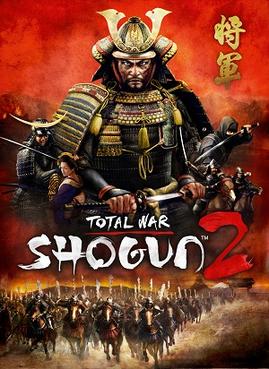
Game Review - Total War : Shogun 2

This is quite a change of pace now... and was inspired in part by a similar review by Jamaipanese's blog. A quick and dirty game review of Total War: Shogun 2 by Creative Assembly / Sega. Now I used to be a bit of a gamer (back when I was younger, and a bit more care-free - and stoopid). But I have to admit that I was always more in to the First Person Shooter (FPS) style games... like Modern Warfare 2 etc. To be honest however, I rarely get a chance to try out any new games. I couldn't however go past this game that was released earlier this year. (By the way - the top image comes from GameZone - as the TWS2 website didn't have a good cover shot that I could see)

The game is set in the 16th century AD, in what was known as the Sengoku Jidai, or the Waring States Period in Japanese history. It follows the daimyo or domain lords battles for ultimate supremacy over Japan. Part turn-based strategy or campaign game, part in-your-face 3D warfare simulation  the game would seem to have a large areas of the market covered. Especially if you have an interest in Japanese warfare or history. In the campaign game you have to build up your empire by careful diplomacy, cunning and civil engineering, as well as knowing the right time to make your move. The battle mode takes you down to ground-zero, as the tactical general, where you command all of your units against a strong AI opponent.
(Source: Official Cinematic Trailer)

The graphics are quite detailed, and add to the feel of the era. It's great to go down to ground-level and what the action (but it's not always that clever at choosing the viewing angles). There's a lot of detail here - though I understand that they've reduced the unit set considerably from previous versions. The one thing that I found a bit annoying is that the game doesn't really allow you to play at the operational level... once you jump into a battle, you're having to micro-manage all units all the same time. In my view, it would be better to be able to set up better "intents" that the units are able to follow (rather than just "move from A to B, doing C"). Instead you find yourself having to flit around the map giving minor unit directions (such as telling units to turn to face a new threat). I also get a little worried when you have to refer to an encyclopaedia to play... it's good to have the info, but less enjoyable for casual play if you need to be constantly checking things up. There's both ground-based and sea-based battles. The sea-based battles are to my mind the weak-point in the game, being too sensitive to individual commanding of each ship. The other main type of battle is based around seige warfare... and this can be quite fun.

Now I haven't been able to play this game anywhere near as much as I would like... and the FPS-gamer in me gets frustrated often (just shoot them....shoot them!), but with a little patience you can have a really challenging experience out of it.

I've included an IGN video review that does a much better job at describing the glorious detail and excitement of Shogun 2 - and to be honest, I don't have the experience to capture the game or put together anywhere near as good a presentation as they can do. It's also good to see how the gameplay looks and feels...though I have to say, it looks easier than it is....

(Source: IGN)

I have to say that I'm not convinced that the game is completely realistic in the construction or behaviour of units, however, in the quasi-mythical world which they create, it's both a plausible and fulfilling environment. You need a pretty good system to get the most out of it (thankfully my box still has a enough juice after 18 months) - although for me the load times were painfully slow. Also - I'm not a fan of the Steam system... there's nothing more annoying than wanting to pick up a game and then having to wait for 300 MB of new downloaded content before you can play. Be warned. On the flipside, you can update and expand your gaming experience very easily.

If you've got an interest in historical Japanese warfare, or just want to immerse yourself in a game with plenty of detail (did I mention that it comes with an inbuilt encyclopaedia) then this is definitely a good game to check out. Let me know your experience if you've played it - especially on the historical aspects of the game. I'd give it a 7/10 as a game - just coz I'm a total FPS-head and don't have the patience to really spend the time required... but it's worth buying just for the experience.

Friday, August 5, 2011

Lost In Translocation - Izakaya Blues In Melbourne

I am, in some ways, a bit of an anomaly amongst our married Aussie-Japanese friends - though I'm sure there's other words they might choose. Odd might be one. Or just-a-little-bit-crazy might be another. The main distinction however is not so much about me, but rather about my relationship with Japan. I found myself sitting in an izakaya in Melbourne last monday (trying to avoid getting a cold), when suddenly I found myself reflecting on the nature of my experience of Japan.

To give you some back-story... my interest in Japan started (way back in 2002) as vague, ill-defined feeling. Like many people I had very little idea about the true nature of the country. I purchased my first Lonely Planet guide to Japan and was starting to plan a solo holiday. I had even signed up for a Japanese language course. Then I met my future wife, T-chan.... right here in Adelaide... and my life changed in an instant. For the better, I might add.

And as it turned out, my first trip to Japan was with T-chan - and it's been that way for each of my eight trips there.

Now let's fast forward 8 years - to me sitting by myself in an izakaya in Melbourne called Chuji. Izakaya are pub-restaurants, and are popular places for groups to socialise, eat and drink of an evening. They're also famous for their tapas or yum-cha-like sharing of dishes. I've often felt I would like to open an izakaya here in Adelaide, but Melbourne's already well and truly discovered the secret. Now Chuji's a great place - a great menu, good atmosphere and popular (not cheap however). But something wasn't right. There was a hole in the vibe that I couldn't quite pin down. When I should have been over-joyed at being in a great Japanese restaurant, I was instead feeling just a little down.

Then it dawned on me... I knew what was missing. It was that T-chan was not there with me. Going out to Japanese restaurants was natural for me now, but it was also something that I almost always shared with my wife. One went with the other. Suddenly, I keenly felt like a visitor to my own life.

Amongst our Aussie-Japanese married friends, I'm one of the few Aussie guys that didn't meet their partner in Japan. Indeed, nearly all of our friends met whilst the guy was teaching English in Japan. It's a very common story (and perhaps one I'll explore in a later post).  As such, my entire experience of Japan has been through the prism of my relationship with my wife. And that might explain why I have essentially an optimistic and positive outlook on Japan. But it also explains why, sitting in an izakaya in Melbourne, I suddenly felt uncomfortably alone and a little lost in translocation of the spirit. I missed her.

Was this an identity crisis? An existential crisis? Or worse - a mid-life crisis? Or just one of those moments experienced by people that have to travel often, and wonder, where do I want to be right now? With my family. Still, I was left with one thought. If it weren't for having met my wife, would I still be sitting here wondering - do I go with the gyutan shioyaki, sanma, or the geso karaage for starters? I look forward to returning to Melbourne soon, and to Chuji... with the whole family.

PS - Next time I'll take my camera.

Wednesday, May 18, 2011

A Tokyo Wedding... Pt 5 The Return

After a suitably long, or was it short time, the proud couple make a triumphant return to the room, once again accompanied by spotlight. This time however, the mood is much more celebratory, and the couple are clearly more relaxed. And yes... that means costume change. It's actually quite common for the newly married couple to change 2-5 times throughout the day, into a variety of different costumes. One example is the replacing of the white kimono for a much more brightly coloured one (the last time to wear this, as a now married woman of higher respectability and reserve). This process is known as o-ironaoshi, or changing colours.Unfortunately (or fortunately for them), they decided to go essentially with the two costumes.

Unlike before, where they spent most of their time seated at the front table (perhaps a good thing for poor S-chan in her kimono), now they were free to move about, going to each and every table to greet their guests.

And here we see a slightly different view, especially of S-chan's gorgeous dress. The thing to note that for the remainder of the reception, she was followed around religiously by a dress-attendant who made sure that the dress was hanging just perfectly. It's perhaps a very Japanese thing, but to be honest if I was S-chan, I'd be a little bothered by having someone semi-permanently stuck to my bottom.

I like this photo... not because it's well posed, or even well constructured... but I love the moment when the new husband of wife suddenly have to work out the tangle of arms... now is it he over she, or the other way around? Sometimes it's the simple things that can be the hardest to adjust to.

Mission accomplished - now it's time to celebrate (boys will be boys).

A photo with S-chan's family. Slightly more reserved, and a bit less air-clapping going on... but no less excited and happy.

Cutting the cake... actually, we couldn't work out to start off with if this was real cake... when it's that large, it's hard to do much "cutting"... but as is often the case, the cutting is really for show. The real cutting's either already been done, or left to the professionals. We enjoyed the cake later on...

Now the moment that we'd been fearing... the big moment for L-kun. The ring ceremony. Of course, removed from the Christian wedding culture/history (although there are many faux Christian weddings in Japan nowadays), the exchange of rings takes on a slightly different feel. We actually were caught off guard a little timing-wise. We were enjoying ourselves, when all of a sudden L-kun was given the rings and gently guided (thanks to one of the hotel staff) through the crowd. Actually, he really didn't need any help at all... he knew what he had to do.

It's been a while since we've been to a wedding here in Australia, but these sorts of ring pillows (and bears) are quite popular in Japan... and indeed Okaasan made the bears and the pillow (nicely done!). I think they're a brilliant idea - but perhaps that's because we had something very similar at our own wedding.

And the thing that surprised me most (and still makes me all warm and oozy on the inside) is that L-kun walked with such a gentle seriousness. I've never seen this side of him before now. And it was truly AWESOME!

And before you knew it, the package was delivered to the target. Bullseye. A happy couple accept the ring pillow.... with a "omedetou!" (congratulations) from L-kun to cap it all off.

I was so proud of our little trooper at that moment. After starting the day off with a bit of a wobble (not wanting to get dressed or put his shoes on), he had got it all together and peaked with a perfect ring bearer performance!

I'd rather foolishly promised L-kun the biggest ice-cream he'd ever had earlier in the day... but now I really wanted to give him a giant treat!

So, with a quick re-adjustment of the rings, before you knew it, they were firmly affixed upon the respective fingers. I am sure that S-chan breathed a silent (internal) sigh of relief. At last.

And with that, the ceremony now felt like it had reached the "official" level... but there was still much more to come.

And one very important thing was missing.... but that will have to wait... till the next post.

Sunday, May 8, 2011

A Tokyo Wedding... Pt 2 The Ceremony & Welcoming

The Hotel New Otani has it's own private shrine down on the ground level (near the gardens) and that's where the wedding party was lead - where the Shinto ceremony is generally for family and very close friends... We didn't realise it before hand, but we were going to have front-row seats, on either side of the bride and groom. Now - the one thing I have to say is that for respect, we were asked not to take photos during the main ceremony.

The ceremony involves a lot of recitaton by the priest to purify the couple... and of course to bless the marriage. Actually, there's a fair bit of formalism to the ceremony, most of which was unknown to us (we had an attendant explain the steps involved before hand - even H-kun needed some last minute reminders). This is not a time for grand theatre, but is meant to be a solemn time. The bride and groom don't exchange vowels as such - nor was there an exchange of rings (this may be different elsewhere... not sure how things vary by location, or by couple). Indeed the sakaki branch (on the front bench) is used to join the two together at this stage in sacred offering. Actually - the official marriage is done before hand through the equivalent of the Council Offices, but that doesn't distract from the importance of this day of public joining together.
The Shinto Shrine

The ceremony ends with the san-san-kudo ceremony, which might be translated to 3x3=9. Other than the educative value in reminding us of our multiplication tables, you might be wondering what that might have to do with a wedding. In this the bride and groom take turns to sip from three cups of sake, three times each (nine times in all); three is an auspicious number... therefore three times has to be a truly lucky combination - san-san-kudo. This process is known more generally as "sakazuki-goto", where sakzuki characteristic very wide, shallow sake cups - and often is used in Japan at the completion of a contract or something important. It doesn't get much more important than marriage. The sake is said to be instilling the spirit of the god in the marriage... actually alcohol pretty well features throughout the day and evening (much like weddings in many cultures, strangely enough). so there must be a lot of the gods to go around.

In historical Japan, it was the groom that would be adopted as part of the bride's family upon marriage (this was known as "mukoiri-kon", and was useful in moving labour - for hard field work - between families. With the development of a strong military caste system, this was turned around such that brides in turn left their family to become formally part of the grooms family (or "yomeiri-kon")... now women were seen as the labour capital in the agrarian society. This tradition (of brides formally transitioning their family) has continued on to modern times, though it has been softened in meaning. On a personal note, after T-chan and I married, she had to go to her local council office to effectively be removed from her families register. It's a harsh reminder of older times, and also a sobering moment for a daughter.
The Newly Married Bride Gets Ready

Back up stairs after the main group photos had been taken, we enjoyed the official welcoming party. The day is actually party after party, each party having a slightly different feel (and guest list). Hard work for the newly married couple, both in the preparation and implementation. I guess, coming from Australia we'd missed most of the hard lead-up work... and could just come in and enjoy things. By this stage, all of our concerns before the trip had completely melted away in happiness.
Daddy and son

One of the fun things is to read the couples welcoming profile... even L-kun took a serious look at it. I suspect he was just trying to find his favourite uncle H-kun in all of the photos. The couple also had a lot of faux-newspapers printed up with news stories about themselves and greetings from guests. I love the idea of a couple profile - it's a great way for everyone to get to know the couple from a different perspective than they might be used to.

The brides father took a moment to reflect on the change of life (or just to get a look at the weather). The second daughter to be married in the space of a year. Outside the fickle spring weather had turned wet and windy. Inside there was warmth and love enough to keep the poor weather at bay, and smiles on the faces of all the guests.
The Bride's father
The welcoming is not really a welcoming by the couple... Actually, the couple were notable in their absence at this point (and for good reason)... An important part of this stage is to make sure everyone is being looked after, and also to receive gifts from guests. It is still commonplace in Japan for the couple to receive money as a wedding gift (and in turn they will receive a thank you gift from the couple, as custom requires).

The couple meanwhile were getting ready for the next stage. The reception party proper...

Monday, April 25, 2011

Leaving Japan... For Now...

Well, I sit at the Qantas Club in Narita Airport with mixed feelings. Well, actually the feelings are generally one of disappointment that the holiday's over and also that I'm leaving T-chan and L-kun in Japan (even though it's in the safety of Hokkaido). Actually, as I was sitting down to write a few emails, there was a short, sharp (though fairly significant) earthquake that was strong enough to get the Q Club staff excited (and asking us to get away from the windows where the computers were located). All very dramatic...and perhaps a fitting way to end the trip.

It was a great trip - filled with lots of new and different experiences. I'm so happy to have come now - though I will admit that there were moments when I questioned the sense of it. Even in this environment where Japan is suffering (and in tourist and economy-wise is still suffering) there can be moments of happiness and lightness. I can only hope that a new day dawns on Japan, and the Rising Sun brings a prosperous - and let's face it, lucky - new era. This is almost certainly a changing point for Japan...one way or another. And with each challenge there are many opportunities for positive change. New beginnings - in a country that has both the long history of resilience to nature's fickleness, and the ability to re-invent itself in times of need.

Nippon, ganbare!

Sunday, April 24, 2011

Sapporo - My Second Home

Back in Sapporo, I had about a week or so to relax and recover (T-chan and L-kun stay on for another almost month after I return to cold old Adelaide). The weather in Sapporo in spring can be pretty hit and miss (mostly miss) with the snow turning dirty, and the weather turning wet (but still cold).

The snow in the mountains surrounding Sapporo is rapidly disappearing, with the signs of green very slowly appearing. Unlike in Australia where summer means brown, and winter green, it's the opposite here. Once the white blanket of snow starts to melt, it leaves a fairly desolate brown landscape as the vegetation slowly remembers summers warmth.

For me, Sapporo also means family time, and for L-kun that means parks. 

We had a look at a new garden park, Nakajima Kouen, in the city... which is one of Sapporo's date spots. At this time of year, it's pretty cold.


And about the only dates that are going on are between couples that have seen quite a few springtimes themselves.

There are however the first signs of a beautiful Sapporo spring appearing.

But the ominous vestiges of winter remain, and the ever present karasu (crow) lends an eerie punctuation to the landscape. 

Even though Sapporo is a big city (5th largest in Japan), it has been hit hard in recent years due to the slow economy... and with the recent events, times are getting tougher. There is a steady resilience to the people that is born from the cold depths of a Hokkaido winter. 

We went to Otaru on our way to Niseko... Otaru is the nearby tourist city that is especially popular with China and Korea. It's famous for it's canal system, it's glassworks and it's music boxes (and progresively for it's wine industry of all things).


And whilst it would normally be thriving with tourists, today it was like a ghost town. The tourists have stopped coming, scared off by the tainted Japan brand perhaps, but whatever the reason it spells a hard spring ahead for the city that depends on tourism... even though it's so far away from Fukushima.

Maybe a musical (belated) Christmas wish is for common sense to prevail, and for normality to be returned. 

In the 8 trips to Hokkaido that I've made, it might be surprising that I've never been to Niseko, or little Australia as it might be known. Come winter, the population is overwhelmed by Aussie skiiers. The season is still open in Niseko, though the snow quality (that is  one of the reason for it's popularty) is well and truly gone. We stayed at the Prince Hotel in Hirafu (Niseko) which has the one advantage of having not only a large public onsen, but also private onsens in the hotel rooms. A great way for a family to enjoy an onsen together (and this was our son's first experience - and he loved it).


The other advantage is some good views of Yotei, Hokkaido's Mt Fuji. Like Fuji, Yotei can be a little temperamental in showing itself... especially on a gloomy spring day. It's form however dominates the scenery for many 10's of km around. 

Whilst it's possible to climb Yotei, it's not actually a ski mountain itself, and perhaps it would take a brave person to attempt it's hazardous slopes.

We were happy enough to be a little less adventurous, taking to our sled in the pretty wet snow. Whilst the quality might not be there, it's still a fun opportunity to enjoy the snow together with our family. Something that's not so easy in Adelaide. 

We were originally going to combine the trip to Niseko with a trip to the Shakotan Peninsula - however, a high temperature with L-kun put paid to that idea. Something for next time... when the weather is nicer.

So as my days in Sapporo, and Japan, come to an end, I have to say that it's been a great trip - although it started in slightly stressful conditions. Despite the constant media attention on the negative, the great things about Japan are still there for the enjoying. I'll post more complete accounts on my other site as I get to them (I'm stilll posting about 2010, so it might take a while however).

PS - it looks like Qantas have now resumed their normal (reduced?) flights to Japan... so I should be good to go tomorrow lunchtime departing from Sapporo to Tokyo to Sydney to Adelaide. A quick hint - we discovered the joys of taking an international connecting flight (QF81) from Sydney to Adelaide which means that you don't have to clear customs in the tragedy that is Sydney International Airport.